
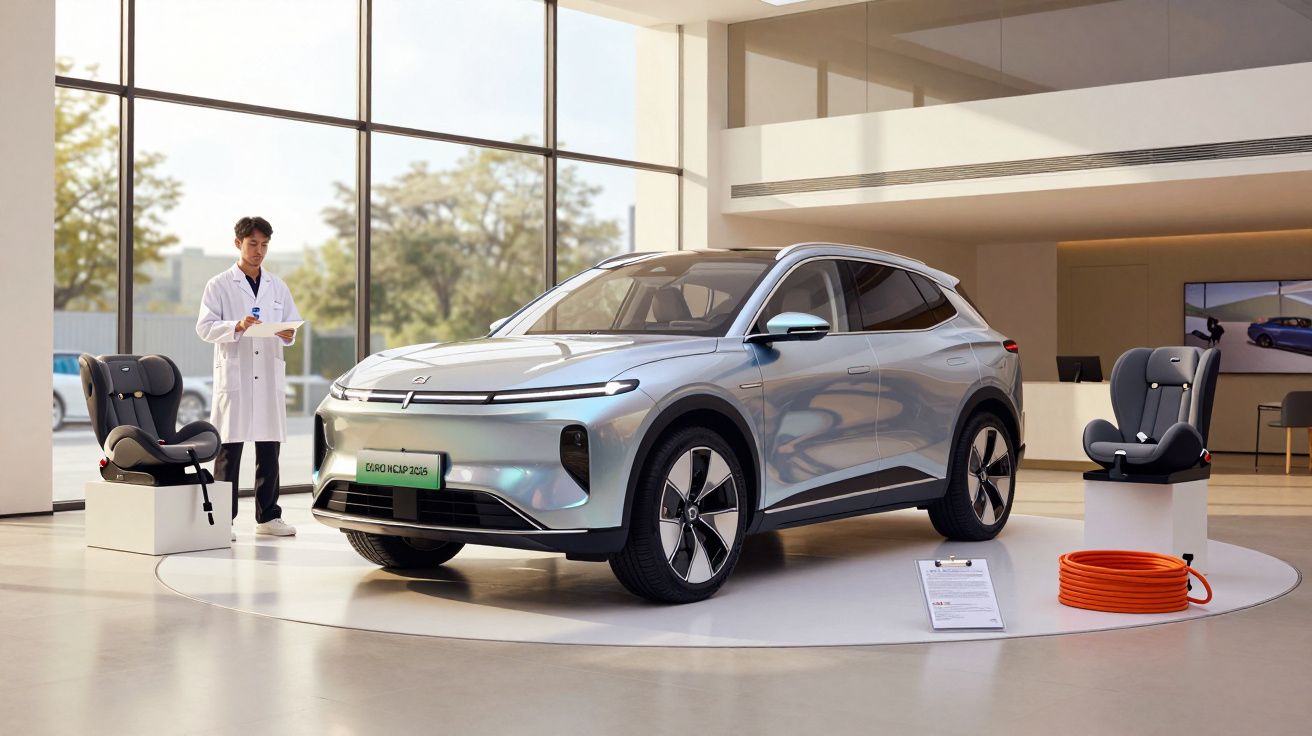
Euro NCAP is overhauling its assessment regime, sharpening the focus on how modern driver-assistance systems behave on real roads, how vehicles avoid crashes, how well occupants are protected, and how easily emergency services can respond after an impact-changes that are expected to raise development costs for manufacturers competing in Europe.
Stronger scrutiny of driver-assistance and “safe driving” technology
The first strand of the update centres on safer driving, with closer examination of the performance of in-car assistance features. Euro NCAP will pay particular attention to lane-keeping systems, adaptive cruise control and automatic emergency braking.
As well as measuring how accurately these technologies operate, experts also want to judge whether the systems interact with drivers in a clear, consistent and predictable way-an increasingly important issue as more vehicles rely on semi-automated functions.
Crash-avoidance tests expanded for busy, real-world scenarios
The second area targets collision prevention. Updated testing will probe how well vehicles detect pedestrians, cyclists and other hazards, alongside the effectiveness of blind-spot monitoring.
Euro NCAP will also assess whether onboard electronics respond appropriately in fast-changing traffic situations, reflecting the complexity of everyday driving in towns and on motorways.
New approaches to protecting occupants, including children and older people
The third element strengthens occupant protection requirements. Euro NCAP is introducing new methods for low-speed frontal impact testing, while placing greater emphasis on safeguarding children and older passengers.
The revised criteria also increase expectations around the body structure’s ability to absorb energy and the performance of airbags, with the aim of reducing injury risk across a wider range of crash types.
Tougher expectations for post-crash rescue and EV safety procedures
Finally, Euro NCAP is reinforcing standards related to rescue and post-collision response. The measures cover practical issues such as how easily doors can be opened after a crash.
They also include checks on the safe shutdown of high-voltage systems in electric vehicles and the correct transmission of emergency notifications-steps designed to support first responders and reduce secondary risks.
Higher costs for manufacturers, but ratings remain crucial in Europe
The reforms are expected to intensify pressure on carmakers, as meeting the updated benchmarks will likely require more advanced sensors, higher-cost materials and more sophisticated electronics.
Despite the added expense, achieving strong Euro NCAP results remains a key factor in brand competitiveness across the European market, where safety ratings can influence consumer choice and fleet buying decisions.




Comments
One thing I don’t see talked about enough is the decision between fixing a roof versus replacing it. It feels like the right choice really depends on the age of the roof, material, and how often repairs keep coming up. A newer roof with isolated issues is one situation, but repeated problems might be a sign of a bigger issue. I’ve been reading more about how professional inspections can help homeowners plan better long term instead of just reacting after leaks appear.
https://portcityexteriorsroofing.wordpress.com/2025/12/02/roof-inspections-leland-nc-why-they-matter/
[url=https://www.asakusaherabunakai.site/?activity=%e6%b4%bb%e5%8b%95%e5%90%8d#comment-8804]Things people talk about[/url] ff76bf5
Leave a Comment