
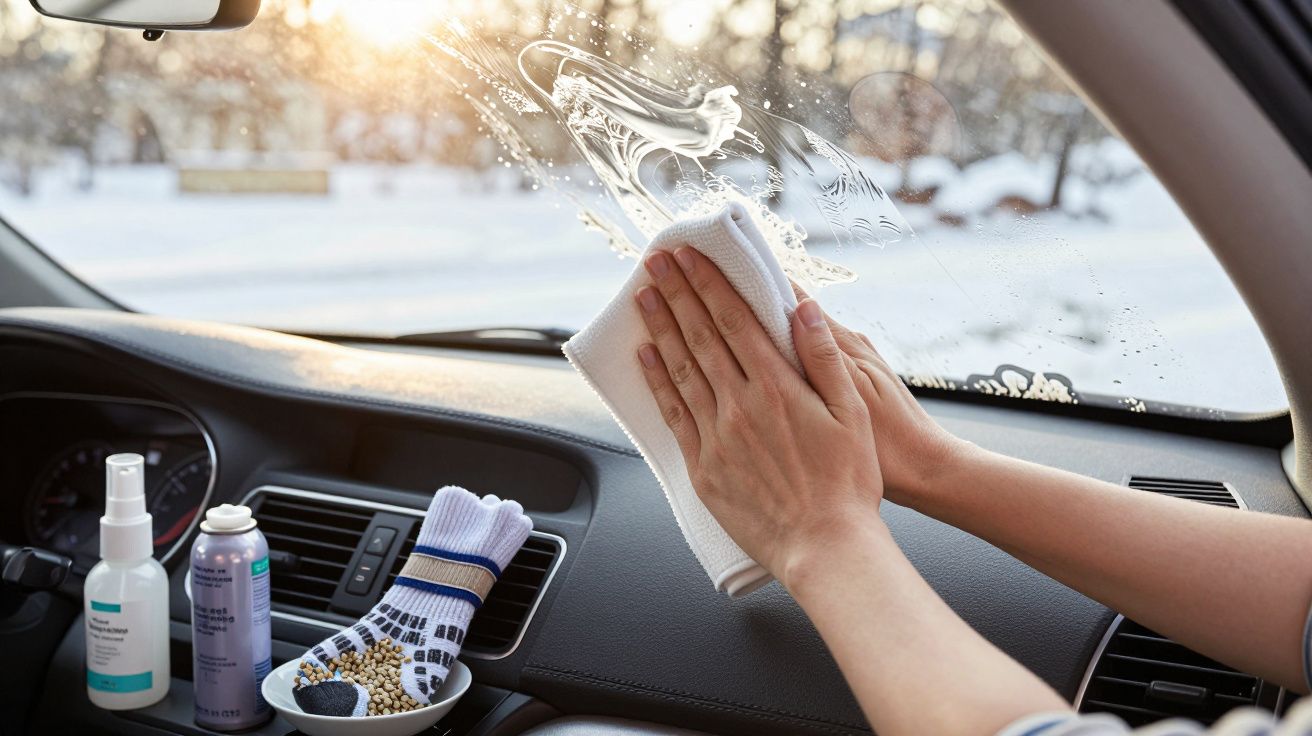
Freezing morning, rushing out, cold car.
And there it is again: the windscreen completely misted up, holding your day back before it’s even started.
Anyone who drives in the colder months knows the routine: damp glass on the inside, near-zero visibility, and the mad dash to wipe it with a cloth, crack a window in biting air, or wait for the demister to finally do its job. What many people don’t realise is that there are simple, cheap-and even slightly unusual-ways to stop that internal mist forming in the first place. Some come from the car itself; others are sitting on a bathroom shelf or in the kitchen.
Why windscreens mist up so much in cold weather
Before the fixes, it helps to understand the problem. That familiar “fog” is just condensation: water vapour in the air inside the car turns into tiny droplets when it hits a colder surface, such as the glass.
The classic recipe for misting is warm, humid air inside the car meeting a cold windscreen.
Some things that make it worse in winter:
- Wet clothing or rainwater brought into the car
- Sodden mats from puddles and mud
- Passengers’ breath with the windows shut for long periods
- A big temperature difference between inside and outside
With that in mind, the approach changes: it’s not enough to “wipe the mist” after it appears. You win by stopping it forming-or at least by cutting down the amount of moisture available inside the cabin.
The shaving foam trick that surprises drivers
A tip shared by seasoned drivers can sound like a joke at first: using shaving foam on the inside of the windscreen. It genuinely works.
How to apply shaving foam to the windscreen
The steps are straightforward:
- Clean the inside of the glass with a clean, dry cloth.
- Put a small amount of shaving foam (it doesn’t need to be expensive) onto a soft cloth.
- Spread a thin layer across the entire inside of the windscreen.
- Buff with a second dry cloth until the glass is completely clear.
The foam leaves an almost invisible film that makes it harder for water droplets to cling to the glass-reducing misting.
Many people will recognise the idea from swimming and diving: soap (or similar products) is used on the inside of a mask to stop it fogging. In a car it’s the same principle: the product changes the surface behaviour of water so it doesn’t bead into vision-blocking droplets.
The effect isn’t permanent, but it often lasts for days or even a few weeks depending on use and how damp the car gets. When you notice the glass misting more quickly, just repeat the process.
Drying the air inside: simple tricks using household items
Another key step is tackling moisture in the air inside the car. A few everyday items can help a lot.
Soaking up moisture with a sock and cat litter
A popular DIY option is the “dehumidifier sock”. Here’s how to make one:
- Use a thick sock with no holes.
- Fill it with mineral cat litter (clumping clay type) or uncooked rice.
- Tie a firm knot and place it inside the car, ideally near the windscreen or on the dashboard.
Both mineral cat litter and rice absorb some of the moisture in the air, making condensation less likely. When the contents feel damp, replace them with dry material.
White vinegar, washing-up liquid and bicarbonate of soda: quiet helpers
Other easy-to-find products can also help reduce misting:
| Product | How to use | Main effect |
|---|---|---|
| White vinegar | Mix 1 part vinegar to 3 parts water, apply to the inside of the glass and dry with a microfibre cloth. | Cleans, removes greasy residue, and leaves a light film that reduces water clinging. |
| Mild washing-up liquid | Rub a single drop into a damp cloth, wipe the glass, then buff-no rinsing. | Creates a very thin layer that makes droplet formation harder. |
| Bicarbonate of soda | Put some in a small open container or saucer and leave it in the car. | Acts as a mild dehumidifier and absorbs odours. |
A properly deep-cleaned windscreen mists less. Grease, dust and old product residue make condensation easier.
Built-in car features many people ignore
Plenty of drivers spend money on gadgets and forget to use what the car already has. A few habits make a real day-to-day difference.
Run the air conditioning-even when it’s cold
It can feel wrong to use air conditioning in winter, but the system is designed to dehumidify the air. Try this:
- Switch on the air conditioning along with the windscreen demister.
- Set the temperature to something comfortable (not icy).
- Turn off air recirculation so drier outside air can come in.
This is often faster than heat alone. In many modern cars, selecting the windscreen demist mode automatically blends heating and air conditioning for exactly this reason.
Cabin (pollen) filter and a simple ventilation routine
The cabin filter (often called the pollen filter) is easy to forget at service time. When it’s clogged, it doesn’t just reduce airflow-it can also contribute to that lingering damp smell.
Replacing it at the manufacturer’s recommended interval helps maintain proper airflow and reduces that “stuffy” feeling. After longer journeys, cracking the windows open for a few minutes once parked can help release trapped moisture-especially after rain, with several passengers, or after carrying wet items.
Daily habits that prevent “internal fog”
Small routines can greatly reduce the chances of starting the day with a compromised windscreen:
- Take out very wet mats to dry outside the car.
- Avoid leaving soaked umbrellas in the vehicle.
- Knock rainwater off coats and shake water from shoes before getting in.
- Don’t leave open bottles or unsealed containers of liquid in the cabin.
Every source of water inside the car adds more moisture to the air. Over time, it builds up.
These habits reduce the “stock” of water available to turn into condensation on cold mornings. A car that stays damp inside all winter is more likely to have not only misted glass, but also strong smells and a risk of mould in fabrics.
What people don’t mention: risks, overdoing it, and smart combinations
Some people reach for extreme solutions, such as plugging a hairdryer into the 12V socket or pouring very hot water over the outside of the windscreen. These can cause thermal shock and, in worst cases, crack the glass. They can also distract you and increase the risk of an accident when you’re trying to set off.
Be cautious too with greasy products or overly strong home mixes. Furniture polish, oils or improvised concoctions might reduce misting briefly, but they can leave the glass smeary, more reflective, and harder to clean later. In bright sun or with oncoming headlights, extra glare reduces visibility.
The best results usually come from combining three approaches:
- Reduce cabin moisture (sock with cat litter, bicarbonate of soda, ventilation)
- Prepare the glass with a subtle barrier (shaving foam, washing-up liquid, vinegar solution)
- Use the car’s own systems properly (air conditioning, demister, clean cabin filter)
Each tackles a different part of the problem, and together they greatly reduce the chances of starting your journey “driving blind”.
If you regularly drive very early or late during winter, it can be worth doing a quick trial at home: on a cold weekend, leave the car outside overnight, apply one or two methods, and see how the windscreen behaves the next morning. That kind of test shows which combination works best for your car, your area, and your routine-without the weekday pressure of the clock.




Comments
No comments yet. Be the first to comment!
Leave a Comment