
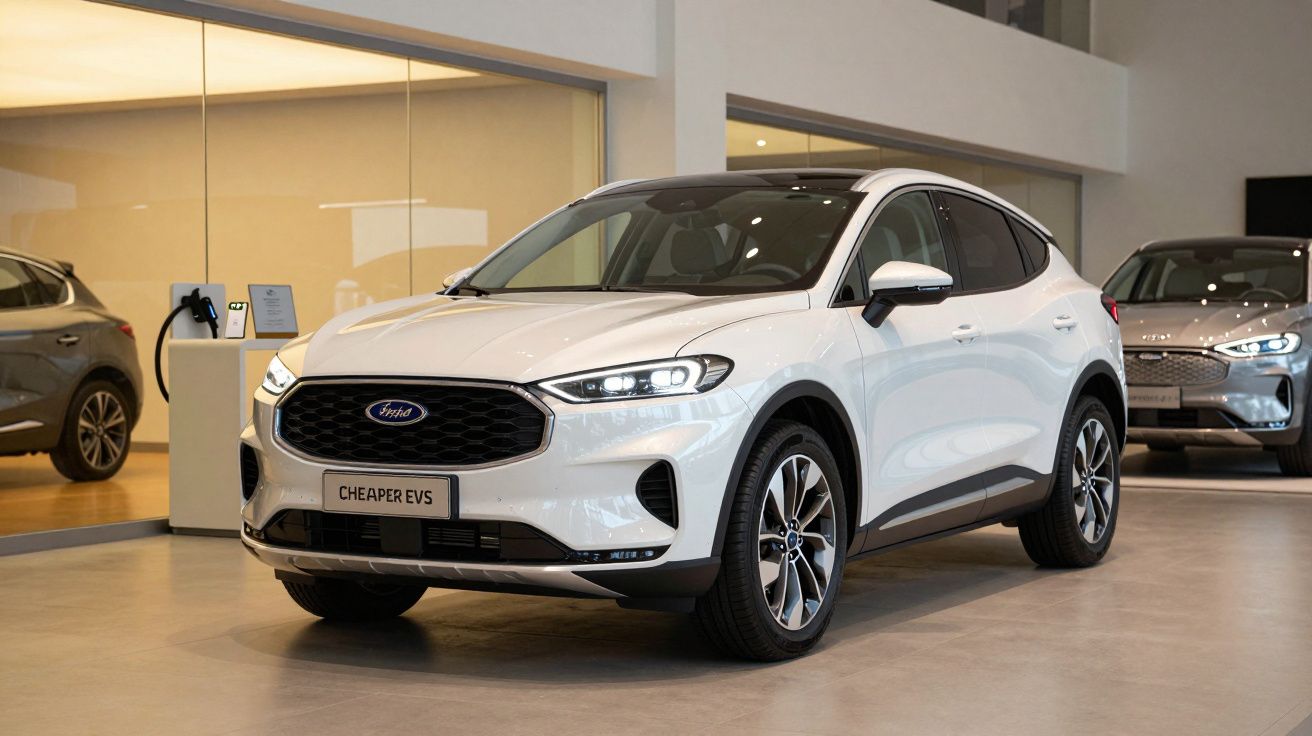
Ford is reshaping its product strategy, shelving some of its most ambitious electric-vehicle projects and redirecting investment towards more affordable cars. The company has formally ended development of a three-row electric SUV it had been working on for several years and has also decided to wind down production of the electric F-150 Lightning just three years after it entered manufacture.
Three-row electric SUV scrapped after delays and shifting market conditions
The cancellation of the large electric SUV follows a series of extended timetable slippages and a change in market dynamics. While the Mustang Mach-E recorded strong sales in 2024 and 2025, Ford has concluded that demand for higher-priced electric models is growing more slowly than previously anticipated.
The business case was further weakened by the rollback of US federal tax incentives for electric vehicles, a move that sharply reduced the project’s financial viability.
F-150 Lightning fails to meet long-term expectations
Ford’s electric pickup has also fallen short of the company’s longer-term hopes. In 2025, the F-150 Lightning sold 27,300 units, a total that was lower than the previous year.
With costs remaining high and demand limited, Ford has opted to prioritise other parts of the market rather than continue expanding the model.
Five all-new models priced below about £31,500 planned by 2030
To replace the cancelled vehicles, Ford is preparing a broad refresh of its line-up. By 2030, the carmaker says it intends to introduce five brand-new models priced at up to $40,000 (around £31,500 at current exchange rates). Ford has indicated these will be entirely new nameplates rather than updated versions of existing cars.
The planned range is expected to span several segments, including: - Crossovers - Pick-ups - Vans - Potentially passenger cars
Petrol, hybrid and battery-electric options to feature
Ford executives say the forthcoming models will be offered with multiple powertrain choices, including petrol, hybrid and fully electric versions.
One of the most significant additions is set to be a lower-cost pick-up with an estimated price of about $30,000 (roughly £23,500), which Ford expects to launch within the next few years.
A shift towards mainstream buyers
The change in direction underlines Ford’s effort to align with what it sees as real-world demand, with more motorists seeking straightforward, cheaper vehicles rather than premium technology-led flagships. By dropping expensive EV projects and focusing on models priced below $40,000, Ford appears to be making a pragmatic attempt to win back mass-market customers squeezed by rising prices and the cost of electrification-an approach that could reshape competition in the US market if the new vehicles arrive at the promised prices.






Comments
No comments yet. Be the first to comment!
Leave a Comment