
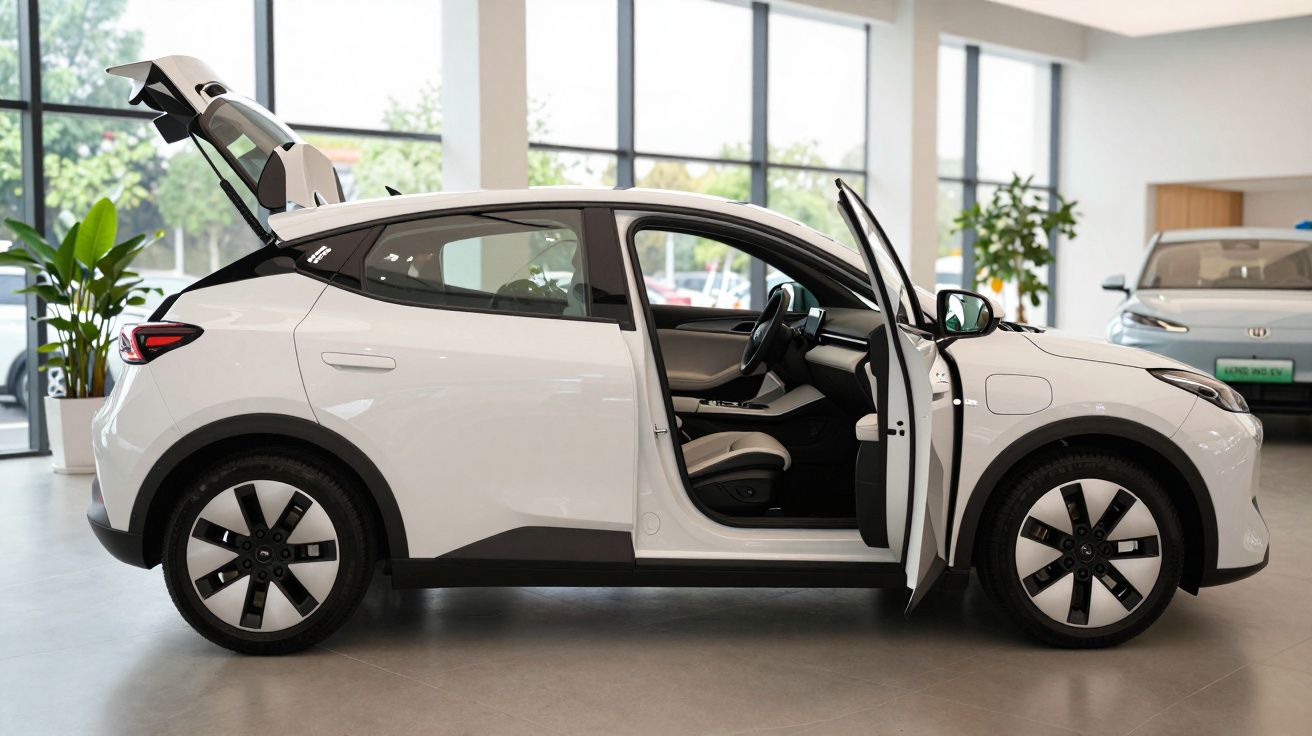
Compact cars are increasingly delivering interiors that feel closer to the class above, as manufacturers stretch the wheelbase while keeping the body’s overhangs short and pushing the wheels towards the corners.
Wheelbase Length Is the Key to Usable Interior Room
The distance between the front and rear axles largely determines how much practical space a car can offer inside. A longer wheelbase typically translates into more legroom and a more efficient cabin layout, even when the vehicle’s overall length stays similar.
For years, that was difficult to achieve in smaller models because conventional mechanical layouts demanded space up front. Transversely mounted engines and their associated transmissions often forced designers into longer front overhangs, limiting how much of the car’s footprint could be devoted to passengers.
Why Electric Car Design Makes ‘Bigger Inside’ Easier
The shift to dedicated electric platforms has changed the equation. Electric motors are more compact than combustion engines, and battery packs are usually mounted under the floor, freeing designers to extend the wheelbase without growing the car’s overall length.
That is why models such as the Volkswagen ID.3 and Renault Scenic E-Tech can look relatively compact from the outside yet provide notably roomy cabins. The same design thinking can be seen in vehicles including the Volvo EX30, Kia EV6 and Hyundai Kona.
An Old Idea That Has Become the New Norm
The basic concept is not entirely new. Earlier vehicles-such as the first generation of MPVs-used similar proportions, and the 1990s Ford Ka was a well-known example of a small car with its wheels set close to the corners of the body.
What has changed is how widespread this approach has become. Today, these proportions are increasingly standard across SUVs, crossovers and even city-focused models.
By-Wire Technology Adds Further Freedom for Designers
Newer technologies, including by-wire systems, along with the absence of propshafts in many electric vehicles, are giving engineers additional flexibility in packaging. The result is a growing number of urban EVs that appear small and easy to place on the road, but feel substantially larger once you are inside.
What to Expect Next
In the coming years, these “more space within the same footprint” proportions are expected to become the default: cabins designed around passengers rather than the constraints imposed by traditional mechanical components.





Comments
No comments yet. Be the first to comment!
Leave a Comment